Pacific Seabird Die-offs Demonstrate the Need for Fishery Action

‘Super’ El Niño is Forcing Starving Seabirds to Compete with Fisheries for Food 

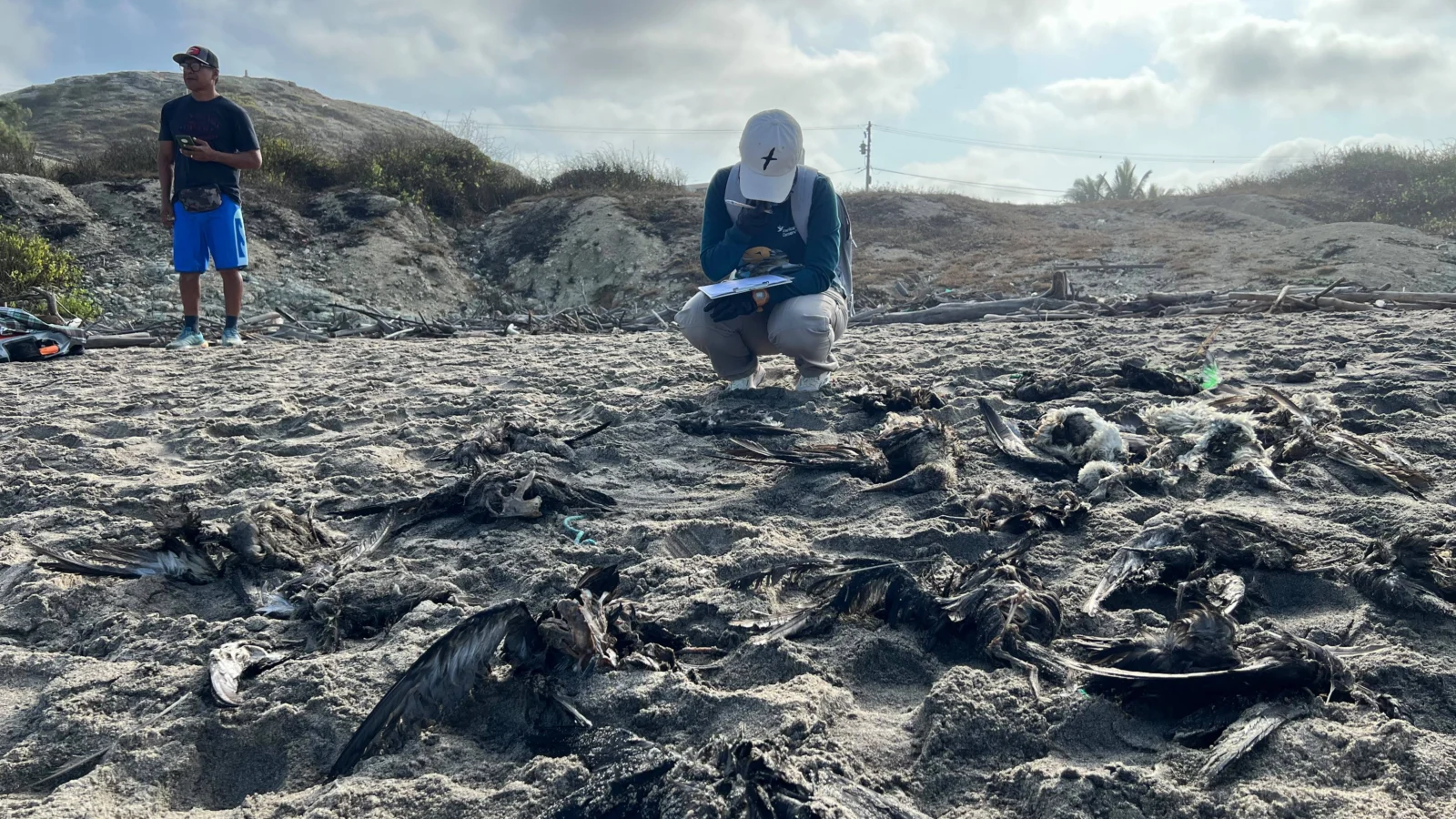
Beached seabirds being documented by researchers in Ecuador. Photo by American Bird Conservancy.

Pacific Seabird Die-offs Demonstrate the Need for Fishery Action

Read in English
Noticias
Escuchar este articulo

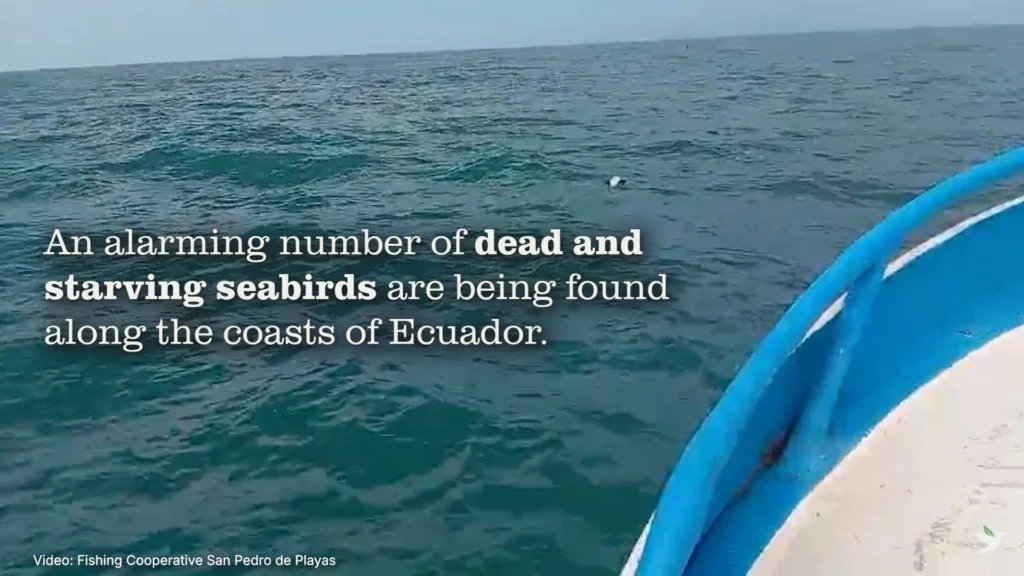
Researchers at Conservación de Aves de Estados Unidos (ABC) and its Ecuadorian Seabird Bycatch Reduction Program (ESBRP) are voicing concerns over the alarming number of dead and starving seabirds currently being found along the coasts of Ecuador. Unusually warmer water conditions caused by El Niño, which are disrupting food sources that seabirds depend on, are believed to be the reason thousands of birds are washing up dead on Eastern Pacific coasts, as recently reportó in California.

“What was occurring recently in California is similar to what we are seeing off the coast of Ecuador,” said Sebástian Cruz, Marine Program Coordinator for South America at ABC. “Our recent surveys have been reporting seabird strandings and deaths every day, but it started to explode in June, with birds also showing up on beaches that had no previous detections. It showcases the magnitude of this El Niño over such a large expanse of the Pacific.”

Volunteer artisanal fishermen who partner with ABC to directly reduce seabird bycatch threats have been helping report and record the unusual increase of beached and floating seabird carcasses in nearby waters.

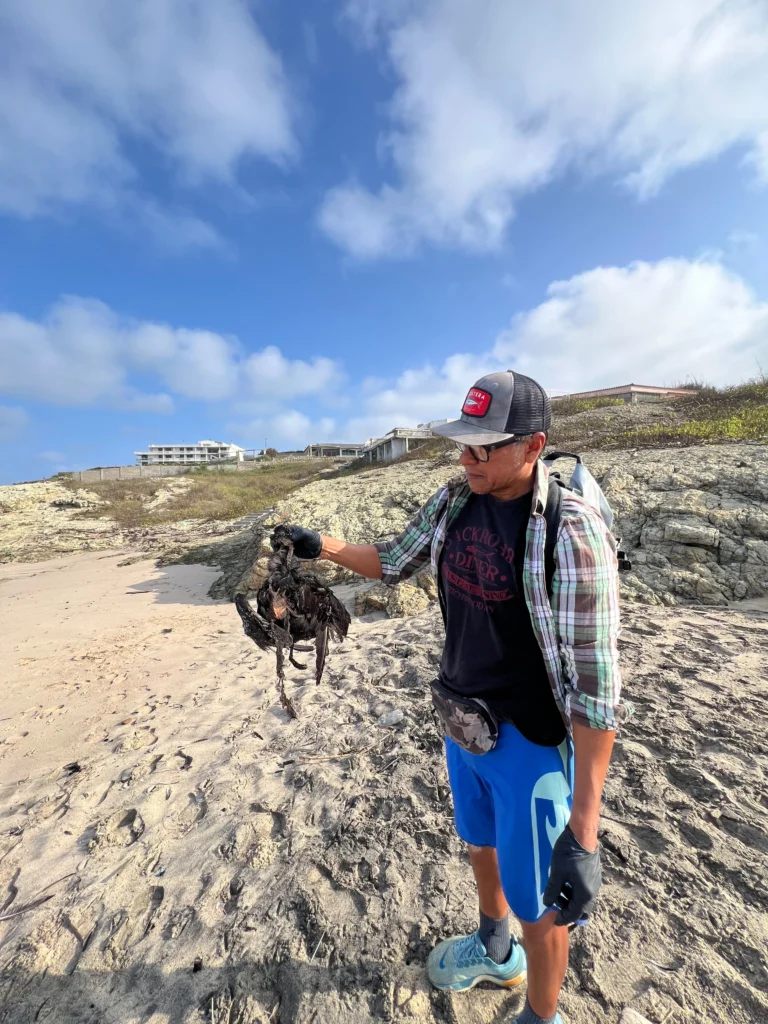
Giovanny Suárez Espín with a dead seabird being documented for the die off event. Photo by American Bird Conservancy.

ESBRP began conducting monthly surveys in the Ecuadorian provinces of Manabi, Santa Elena, and Guayas in November 2024. Until June 2026, they rarely tallied more than a few dozen birds in a monthly survey. In June, however, they counted 638. An additional 968 birds were found in July. Documented species include hundreds of Sooty Shearwaters that recently migrated from New Zealand, Peruvian and Blue-footed Boobies, cormorants, petrels, and Critically Endangered Albatros de las Galápagos. Necropsies are showing that the birds are dying of starvation and have no traces of avian influenza.

“We’re finding an overwhelming number of seabirds with hooks and fishing lines attached,” said Giovanny Suárez Espín, Ecuador Seabird Bycatch Reduction Program Leader for ABC. “We think the birds are so hungry and desperate that they are taking more risks than usual near fisheries and getting hooked in the process.”

The Humboldt Current System is considered the most productive upwelling system of any ocean on the planet, accounting for 15 to 20 percent of the worldwide marine fish catch. Under normal conditions, its colder, nutrient-rich surface waters are a feeding hotspot for seabirds and other top marine predators from thousands of miles across the Pacific. El Niño is causing marine heat waves that disrupt the food seabirds rely on. As waters continue to reach record-breaking temperatures, researchers are concerned that the marine food chain will shift, leaving seabirds with less or no food for thousands of miles.

“Sooty Shearwaters from New Zealand finished breeding in May, and flew across the Pacific as part of their annual migration to South America, expecting to find plenty of food to recover, but there isn’t any. They are too tired and skinny to fly back or find food elsewhere, so they die in masses,” stated Cruz.

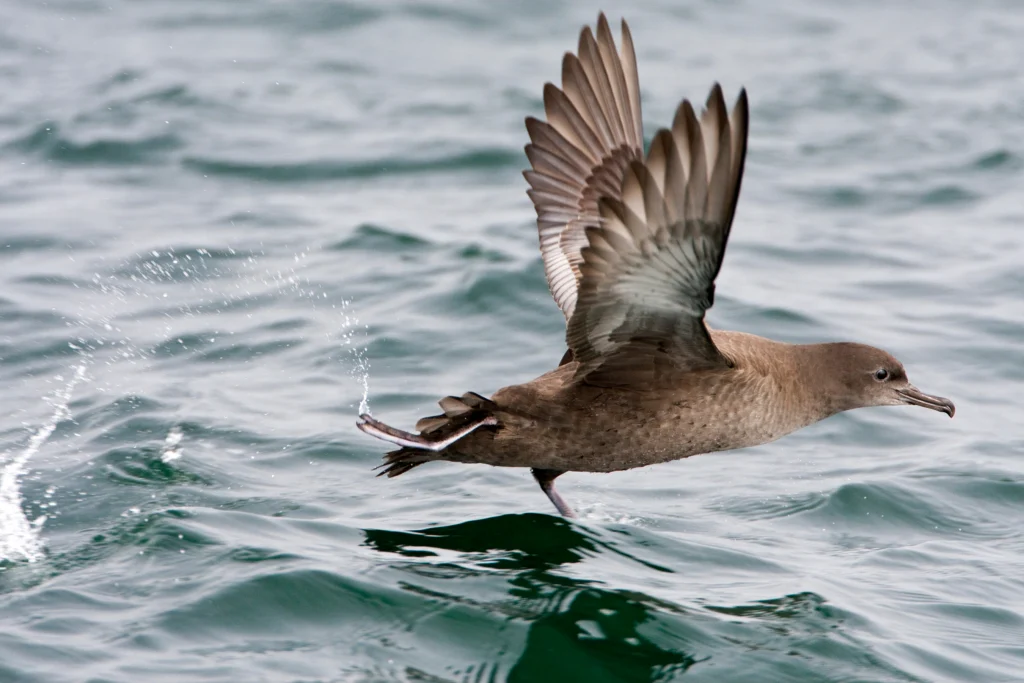
Sooty Shearwater (Puffinus griseus) taking off from the ocean surface off Monterey, California, USA. Photo by Agami Photo Agency, Shutterstock.

“This large die-off is the canary in the coal mine; it’s telling us something important is changing in the Eastern Pacific,” added Suárez. “Seabirds are often an early warning sign that ocean ecosystems are under stress. When birds cannot find enough food, it indicates broader disruptions that ripple through fisheries, coastal economies, and communities that depend on healthy marine waters.” There are more than 50,000 artisanal fishers in Ecuador alone who could potentially be impacted.

Although seabird die-offs are not uncommon, the magnitude of this one has researchers particularly concerned. Seabirds are the world’s most endangered group of birds, with 70 percent declines in the last 60 years. Seabirds are also essential because their Los excrementos nutren entire coastal, island, and ocean ecosystems across the globe. They spend most of their lives foraging for food thousands of miles out in the open ocean. Seabirds tend to be long-lived (some species live 50, 60, or even 70 years), take several years to mature, and reproduce slowly, raising only one chick every one or two years, making it difficult for populations to recover quickly after declines.

“Most seabirds spend a large part of their lives over, on, and under the open water, far from human populations — and all too often far from human thought,” said Sea McKeon, ABC’s Marine Program Director. “Ocean habitat is irreplaceable for seabirds. With the birds already challenged by many threats, this El Niño occurrence is another reason why our efforts to keep seabird populations healthy are so important.”

Because seabirds are so mobile and inhabit such a large area, it takes the efforts of many countries to protect them. Together with researchers in Ecuador, Peru, and New Zealand, ABC has been working to encourage the fishing industry to take measures to prevent seabird bycatch. ABC and partners have also developed the Dispositivo NISURI, which deploys and sinks lines faster than traditional techniques, preventing seabirds from accidentally becoming hooked by baited lines floating at the surface.

The problem of bycatch can be solved. To date, over 2,000 fishers are helping ABC with seabird conservation. ABC is dedicated to working with fishers to reduce this threat and help protect the most endangered group of birds in the world. To learn more and get involved, visit Programa Marino de ABC.
ABC gratefully acknowledges Marilyn and Eldon Ball, the David and Lucile Packard Foundation, the Alan Weeden Foundation, Lynn & Stuart White, and other generous donors for their support of this ongoing project.

Conservación de Aves de Estados Unidos

American Bird Conservancy (ABC) toma medidas audaces para conservar las aves silvestres y sus hábitats en todo el continente americano. Inspirados por la maravilla de las aves, logramos resultados duraderos para las especies más necesitadas, a la vez que beneficiamos a las comunidades humanas, la biodiversidad y el frágil clima del planeta. Todas nuestras acciones se basan en la ciencia, se fortalecen con alianzas y se basan en la convicción de que las perspectivas diversas producen resultados más efectivos. Fundada como organización sin fines de lucro en 1994, ABC mantiene su compromiso con la protección de las aves para las generaciones futuras. ¡Únete a nosotros! Juntos, podemos hacer más para garantizar el bienestar de las aves.

American Bird Conservancy - Contacto con los medios

Periodistas, reciban las últimas noticias sobre conservación de aves directamente en su bandeja de entrada uniéndose a la lista de medios de ABC. Contáctenos por correo electrónico. media@abcbirds.org